
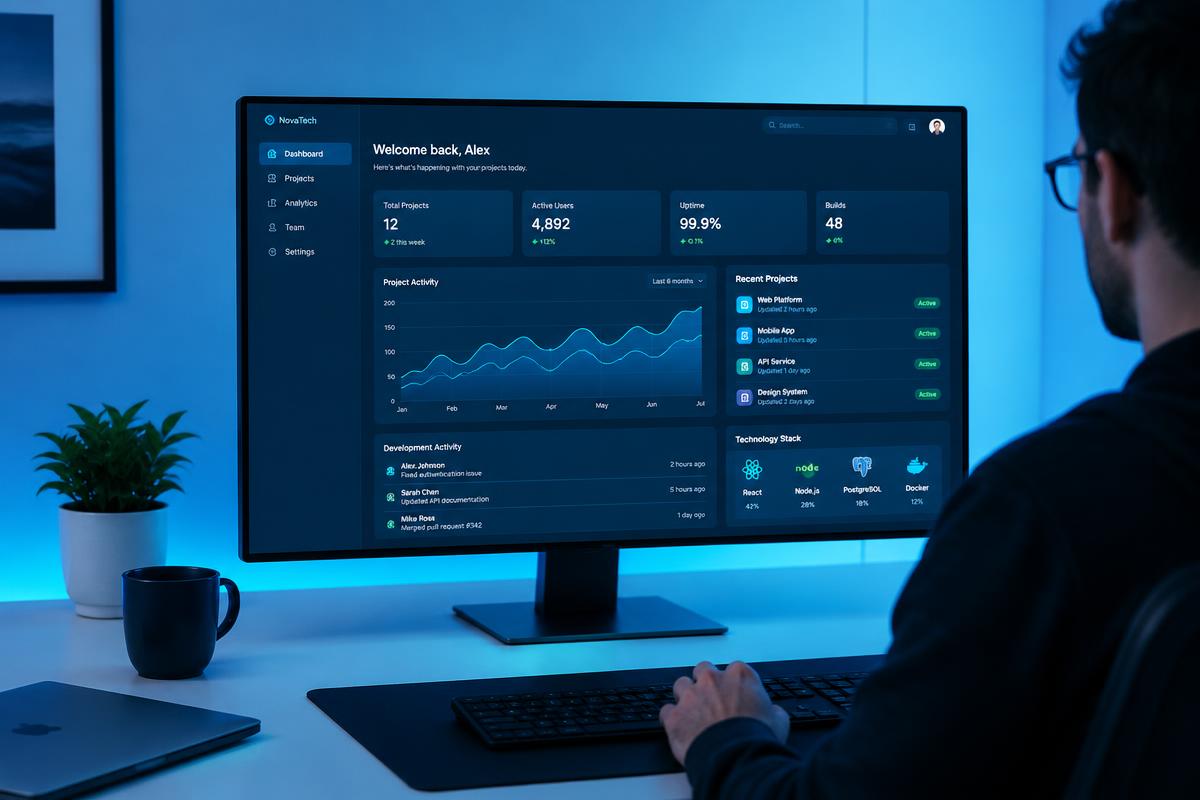
Frontend engineering is the part of a digital product that customers experience directly, but its quality depends on much more than visual polish. A durable frontend connects clear interaction design with sensible architecture, inclusive access, predictable state and measured performance.
The frontend is where strategy, design and engineering meet the customer. Every click, scroll and form submission is a moment where the product either builds trust or loses it. For this reason frontend work deserves the same architectural discipline that teams apply to servers and databases.
At SJ Dev Technologies we treat the interface as a long lived product asset. We plan how it will grow, how new team members will understand it, and how it will stay fast and accessible as features are added over several years.
Architecture should follow product boundaries
A strong frontend separates stable business concepts from temporary interface details. Teams should organise code around product capabilities, define clear data contracts and keep shared patterns intentional. This reduces accidental coupling and allows parts of the product to change without creating risk everywhere else.
Performance is a product requirement
Fast experiences come from deliberate decisions about page weight, image delivery, rendering and data access. Teams should measure the journeys that matter to users, then improve the largest delays first. Real device testing often reveals issues that local development machines hide.
Accessibility improves the whole system
Semantic structure, keyboard access, visible focus and understandable feedback help people with different needs. These practices also create clearer code and more resilient automated tests. Accessibility works best when included in design and engineering from the beginning.
Component systems and design tokens
A shared component library turns design decisions into reusable building blocks. Design tokens store colour, spacing, typography and motion values in one place so that a brand update becomes a controlled change rather than a manual search across hundreds of files. Components should be documented with real usage examples, accessibility notes and clear rules about when not to use them.
State management with clear ownership
Most interface bugs come from state that lives in the wrong place. Server data should be cached and synchronised through a dedicated data layer, while local interface state such as open menus stays close to the component that uses it. Global state is reserved for information that genuinely belongs to the whole application, such as the signed in user or language preference.
Rendering strategy for each page
Modern frameworks allow server rendering, static generation and client rendering in the same product. Marketing and content pages benefit from server or static rendering for speed and search visibility. Highly interactive dashboards can rely more on client rendering. Choosing per page rather than per project gives the best balance of speed and interactivity.
Testing that reflects real users
Unit tests protect small pieces of logic, component tests confirm that interface pieces behave correctly, and end to end tests walk through complete journeys such as sign up or checkout. Visual regression checks catch layout changes that humans may miss. Together they allow teams to release often without fear.
Recommended technology
Tools we use and why
React and TypeScript
Component based interfaces with type safety that prevents a large class of runtime errors.
TanStack Router and Query
Type safe routing and reliable server data caching with background refresh.
Tailwind CSS
Utility styling connected to design tokens for consistent and fast interface work.
Vite
Fast development server and optimised production builds.
Playwright
End to end testing across Chromium, Firefox and WebKit.
Lighthouse and Web Vitals
Measurement of loading speed, interactivity and visual stability.
Step by step approach
How we deliver it
- 1Map the key user journeys and define performance and accessibility targets for each one.
- 2Establish design tokens and a core component library before building feature screens.
- 3Choose a rendering strategy per page type and document the reasoning.
- 4Set up a data layer with caching, loading states and error handling patterns.
- 5Add automated tests and performance budgets to the delivery pipeline.
- 6Review real user metrics after release and prioritise the largest improvements.
Avoid these
Common mistakes
- Choosing a framework based on popularity rather than product needs and team skills.
- Loading large images and scripts on every page regardless of need.
- Adding accessibility at the end of a project when changes are most expensive.
- Placing all state in a single global store that every component depends on.
Measure success
Key metrics
- Largest Contentful Paint under 2.5 seconds on mid range mobile devices.
- Interaction to Next Paint under 200 milliseconds for key actions.
- Cumulative Layout Shift below 0.1 across main templates.
- Zero critical accessibility issues in automated and manual audits.
Practical priorities
What technology leaders should carry forward
- Model the interface around business capabilities
- Measure real journeys on realistic devices
- Treat accessibility as a shared quality standard
Questions answered
Frequently asked questions
Which frontend framework do you recommend?
We most often use React with TypeScript because of its mature ecosystem and hiring pool, but we select based on the product, the team and the long term support needs.
How do you keep a large interface consistent?
Through design tokens, a documented component library and code review standards that encourage reuse over one off styling.
Can an existing frontend be improved without a full rebuild?
Yes. We usually audit performance and structure first, then improve the highest impact areas step by step while the product stays live.
SJ Dev Technologies perspective
The best frontend stack is one that helps a team deliver clear, fast and inclusive experiences consistently. Technology choices matter, but disciplined product engineering creates the lasting advantage.